Voice for Possibility
One of the greatest joys of my life is using my background and experience to inspire graduate students, practicing clinicians & parents to create possibilities with their own clients, in their own practices, and within their children. All of my talks are evidence-based and experience-oriented, with practices and tools, and techniques that my audience can begin to use immediately.
For Clinicians, Schools & Organizations
How to use Treatment Fidelity to strengthen your DTTC practice– In this practical session, we’ll explore how incorporating treatment fidelity can enhance the effectiveness of your DTTC (Dynamic Temporal and Tactile Cueing) sessions. You’ll learn what treatment fidelity is, why it matters for motor-based speech intervention, and how to apply fidelity principles to improve consistency, accuracy, and outcomes. We’ll review real-world examples, discuss common challenges, and provide tools you can use to monitor and refine your own practice. Whether you're new to DTTC or looking to sharpen your skills, this session will offer valuable insights for delivering high-quality, evidence-based therapy.
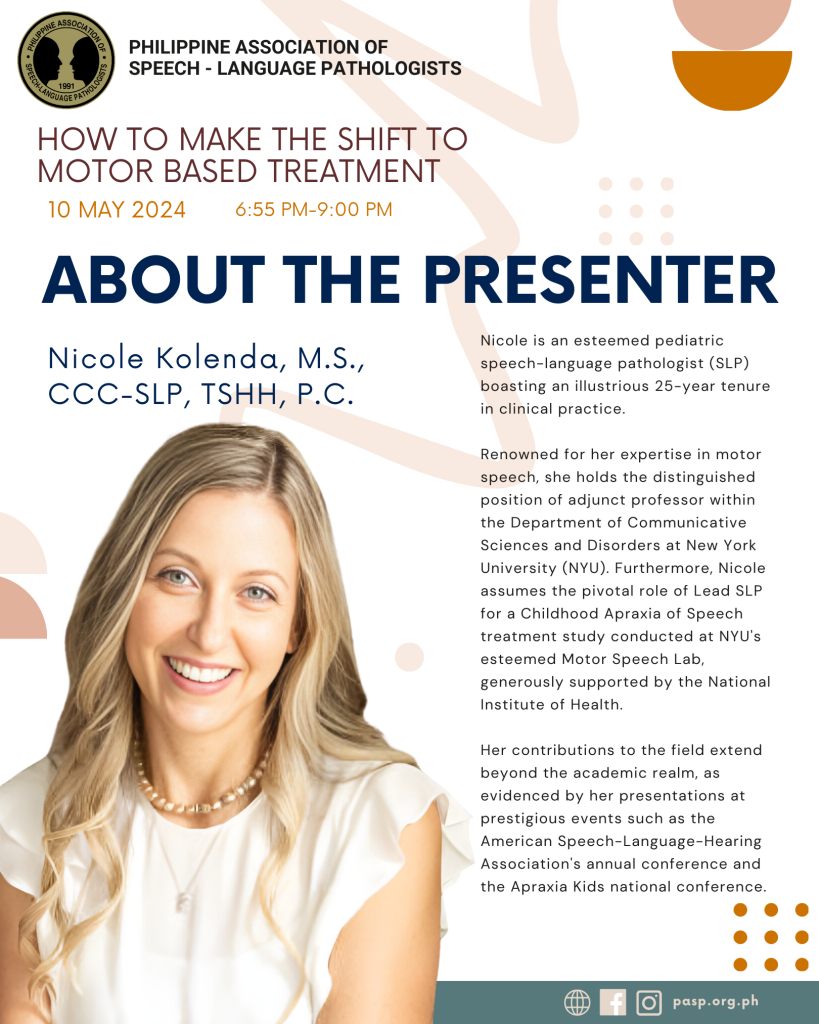
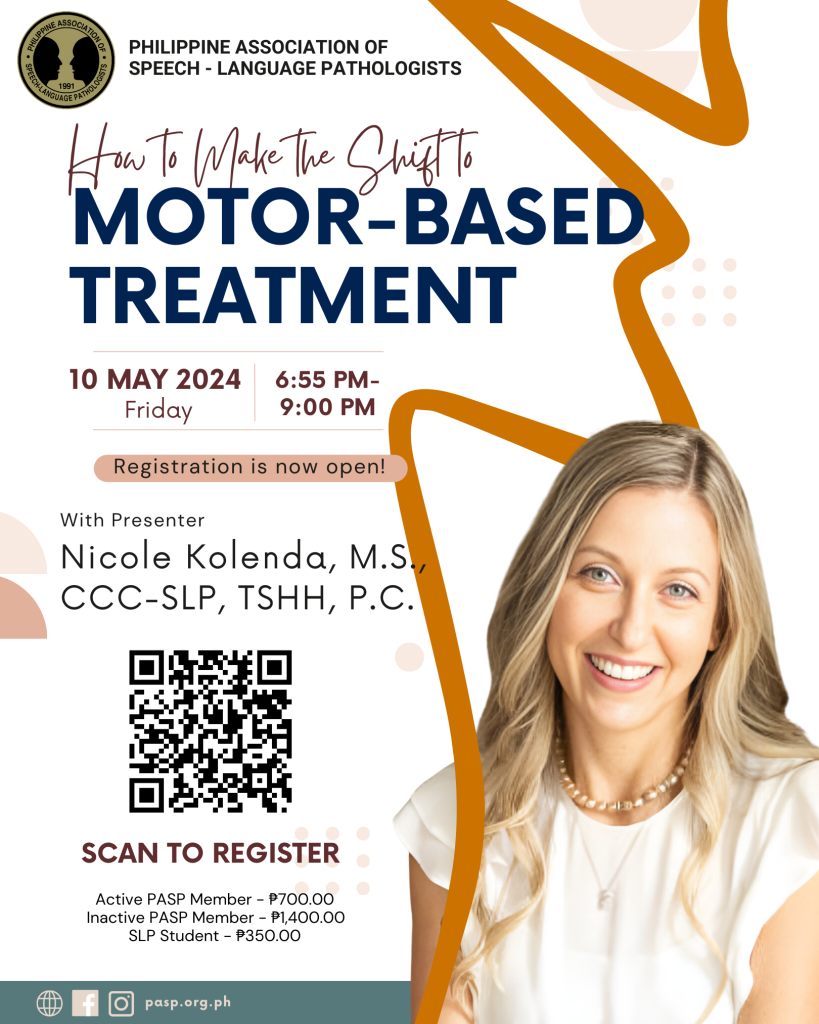
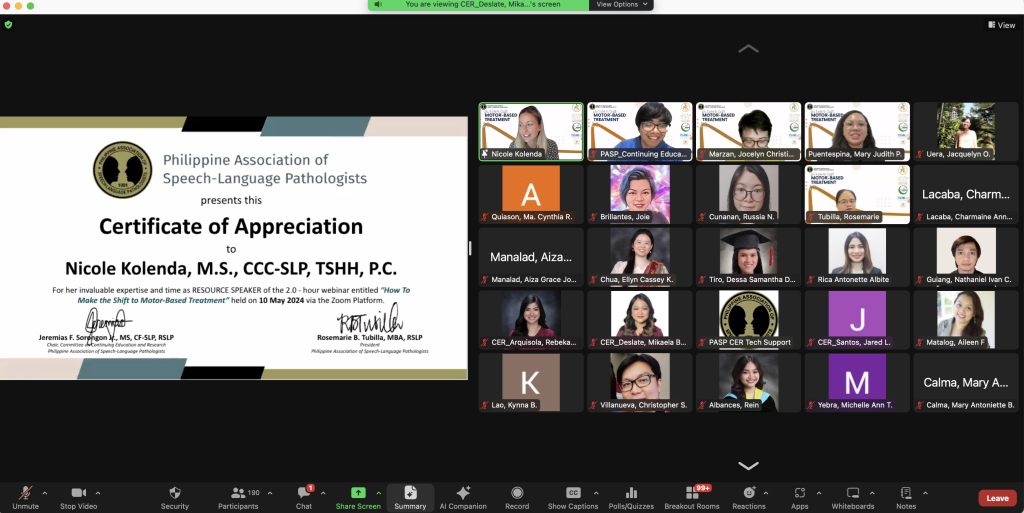
How to Make the Shift to Motor-Based Treatment – This session provides clinicians with a foundational framework for transitioning from traditional articulation approaches to motor-based treatment models. Emphasis will be placed on the theoretical underpinnings and clinical application of motor learning principles, including practice conditions, feedback schedules, and cueing hierarchies. Participants will gain practical guidance on identifying appropriate candidates, selecting targets, and structuring sessions for maximum therapeutic impact. Whether you're working with children with Childhood Apraxia of Speech or persistent articulation disorders, this session will support your clinical decision-making and enhance treatment efficacy.
Using the Principles of Motor Learning to Jumpstart Your Articulation Therapy – This session introduces speech-language pathologists to the key principles of motor learning and how to apply them effectively in articulation therapy. You’ll learn how factors like practice structure, feedback type, and cueing strategies can directly impact speech sound acquisition and generalization. Through practical examples and clinical tips, you will learn how even small shifts in your therapy approach can lead to stronger outcomes. Whether you’re working with early learners or older children with persistent errors, this talk will help you rethink your articulation sessions through a motor learning lens.
Model Replica Chart Analysis – This session introduces clinicians to the Model Replica Chart, a powerful tool for visualizing and analyzing speech sound productions. Participants will learn how to use this analysis to capture patterns of accuracy, consistency, and cueing needs in real time. We’ll explore how the Model Replica Chart can enhance your current speech sound disorder assessments by providing a clearer picture of a child’s strengths and areas of need. Through case examples and guided interpretation, you’ll gain practical skills to implement this innovative approach and improve diagnostic precision and treatment planning.
An Introduction to Childhood Apraxia of Speech–This introductory talk was created especially for parents and caregivers. Nicole will explain what Childhood Apraxia of Speech (CAS) is in clear, easy-to-understand terms. You'll learn how CAS is diagnosed, what to expect during assessment, and what effective treatment typically looks like. The goal is to empower you with knowledge, answer your questions, and help you feel more confident in supporting your child’s speech development. There will be plenty of time for open discussion, so please bring your questions and concerns.
Childhood Apraxia of Speech CAS: Diagnostic Considerations & Therapeutic Strategies Part I – Part I of this two-part workshop focuses on understanding the core features of Childhood Apraxia of Speech (CAS) and the complexities involved in accurate diagnosis. Participants will explore differential diagnosis, key characteristics of CAS, and how to distinguish it from other speech sound disorders. Emphasis will be placed on evidence-based assessment tools, dynamic assessment techniques, and clinical decision-making to support confident and accurate identification. Case examples and video clips will be used to illustrate concepts in real-world clinical contexts.
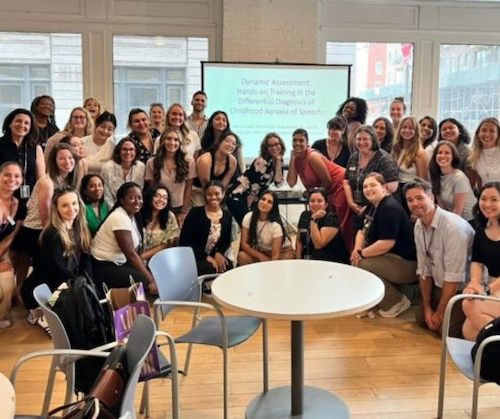
Childhood Apraxia of Speech CAS: Diagnostic Considerations & Therapeutic Strategies Part 2– Part II builds on the diagnostic foundation of Part I by focusing on evidence-based treatment approaches for CAS, with a strong emphasis on motor-based intervention principles. Participants will learn how to plan and deliver effective therapy, including target selection, cueing strategies, practice conditions, and feedback. The session will feature a deep dive into Dynamic Temporal and Tactile Cueing (DTTC), along with practical tools to support treatment fidelity and session planning. Clinical video examples will demonstrate therapy in action and support integration of concepts into daily practice.
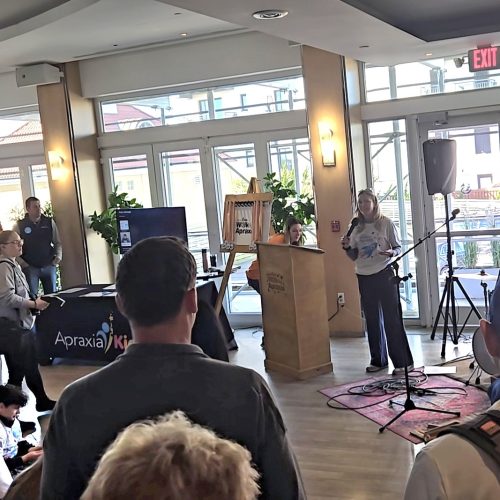
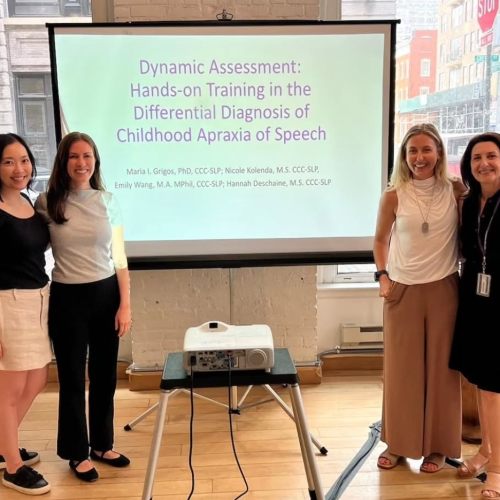
"Nicole is a true leader and advocate in her field and we learned so much from her visit. Her passion for helping children, mothers and families navigate issues of speech and autism is admirable. Nicole is extremely warm and our members were comfortable to ask questions about their personal concerns regarding their children's development."
Theresa King, Mother, The Wednesday Mothers' Club, NY
Excited to have Nicole speak to your team?
Looking for more information?
Upcoming Speaking Engagements
Past Speaking Engagements
- Thrive Global Feature: "I Was Diagnosed with Breast Cancer and 5 Days Later, I Ran a Marathon—Here’s Why"
- Blogger Interview on Speech Pathology Masters Programs: Nicole Kolenda Interview
- Rise Resolute Podcast: Nicole: You are so much stronger than you can imagine
- The Last Tenth Podcast: E2: Getting Comfortable with Being Uncomfortable
- What's Not Being Said: Creating Possibility From Trauma
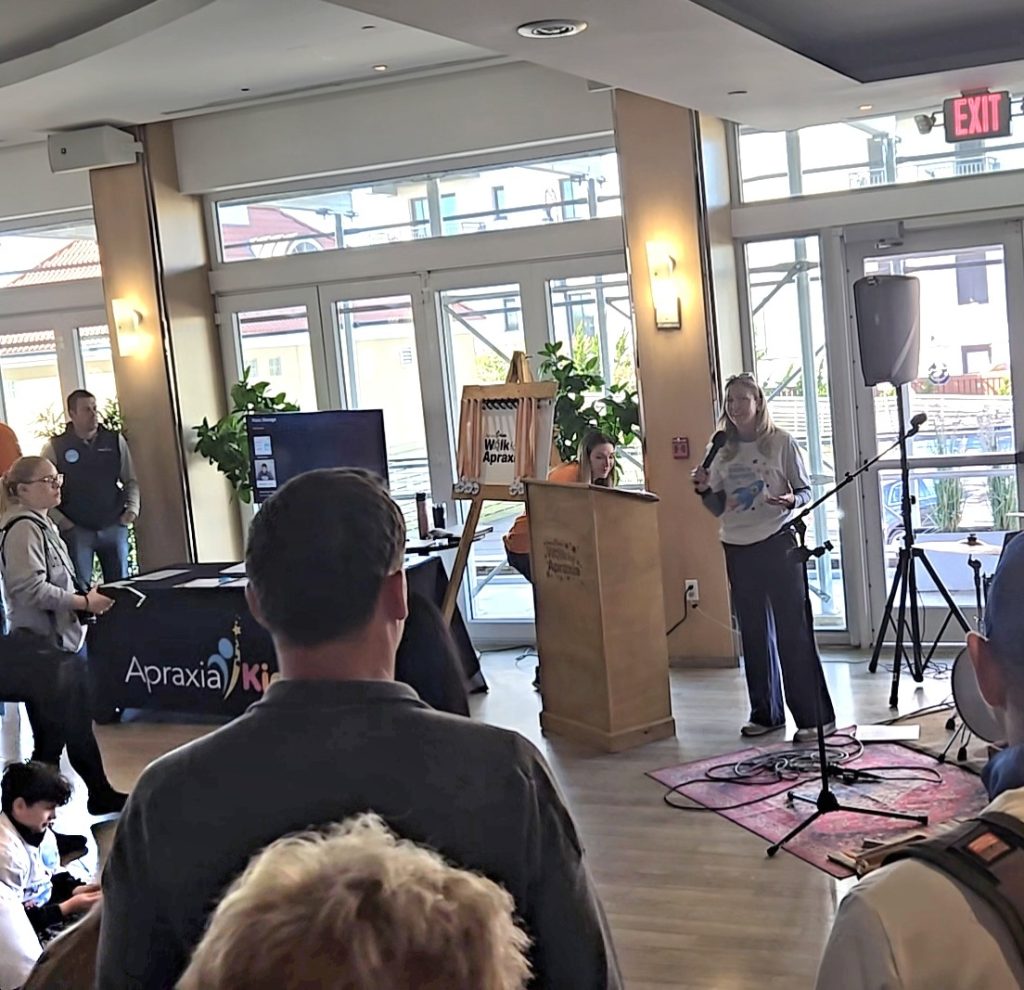
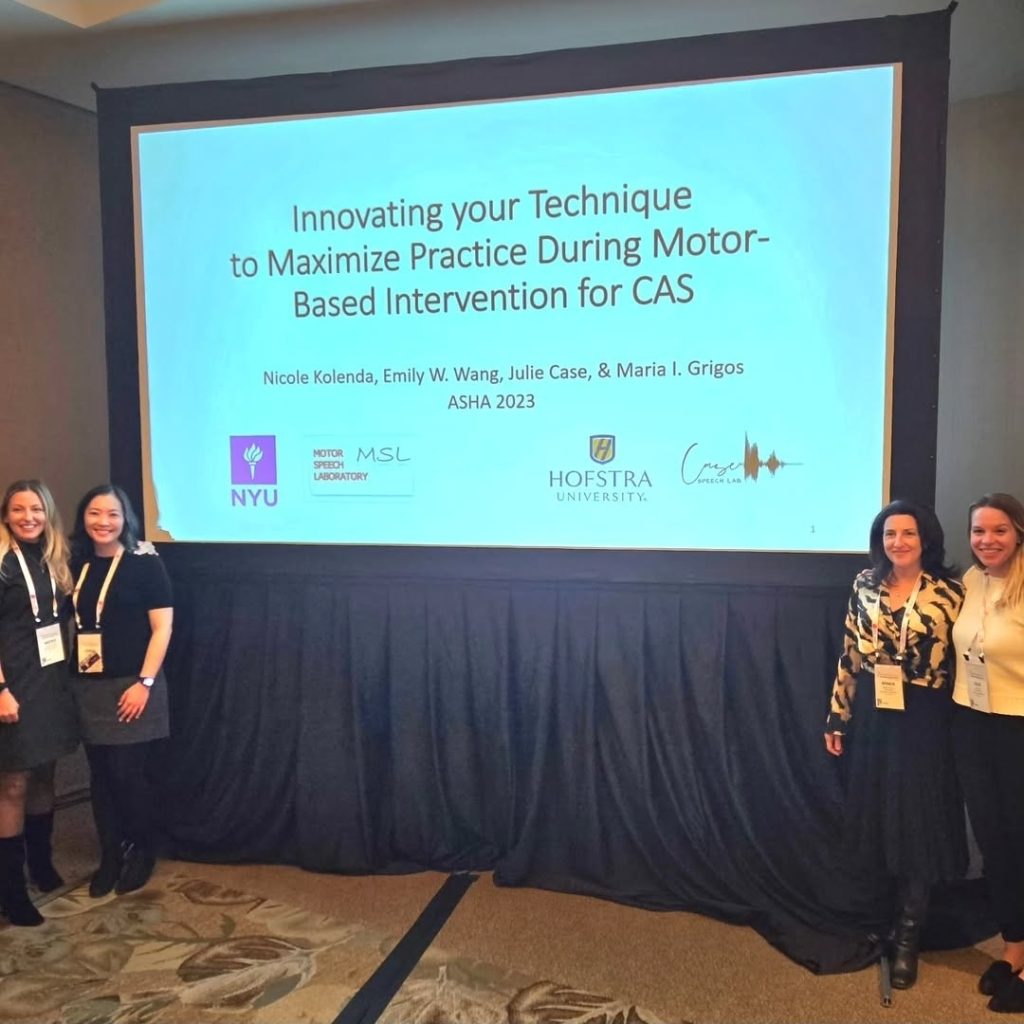
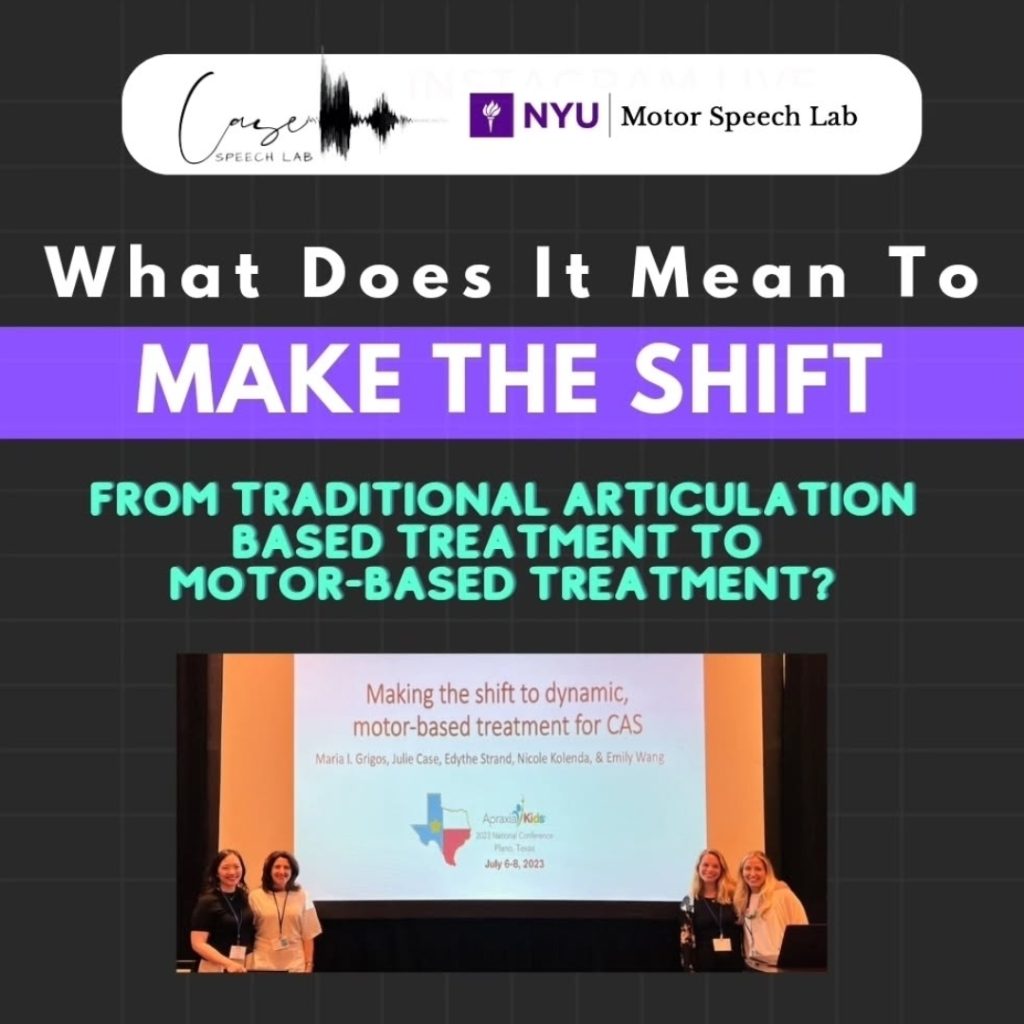
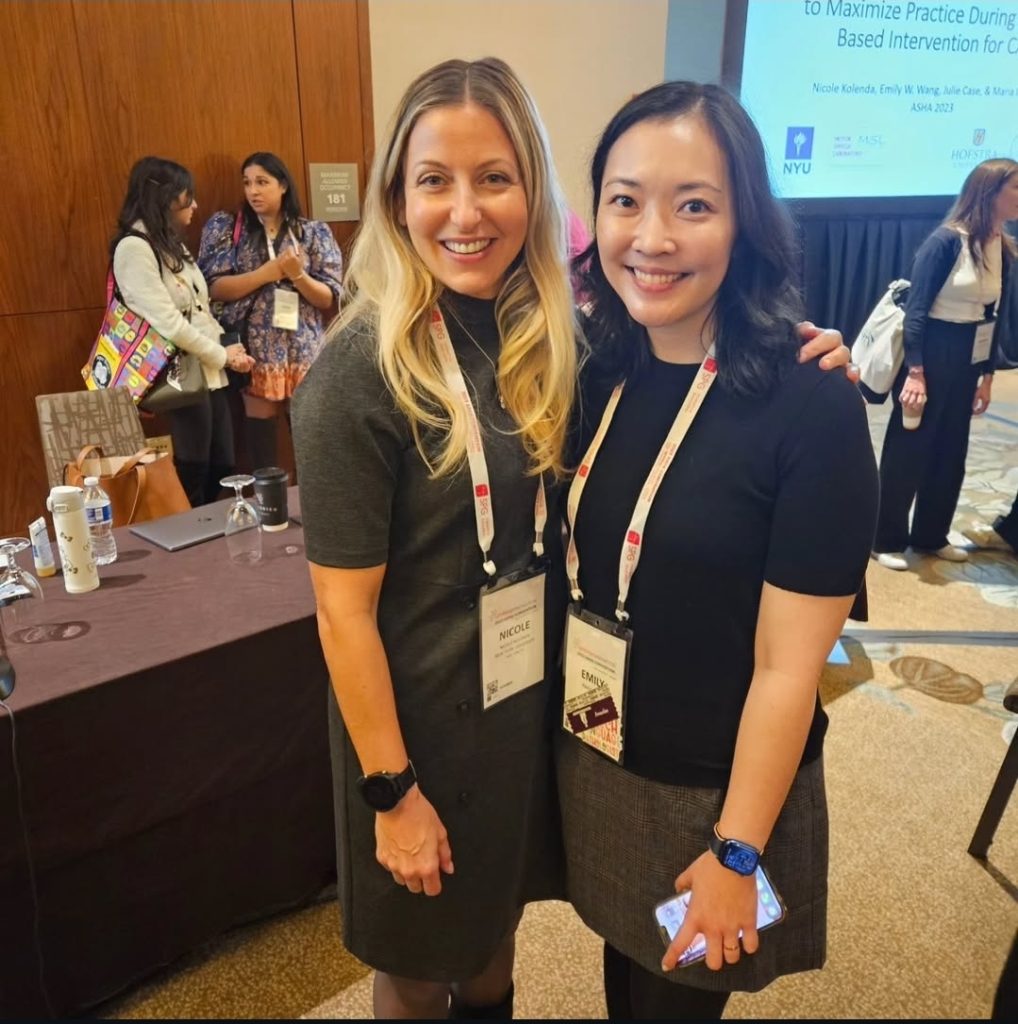
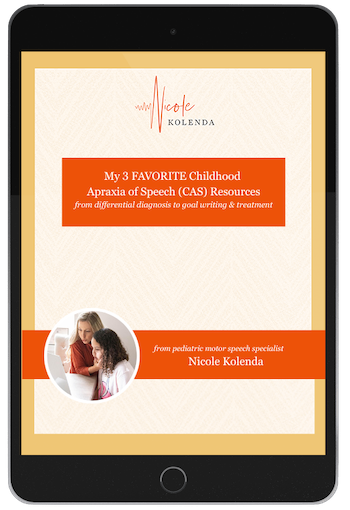
I’m so excited to share my 3 FAVORITE Childhood Apraxia of Speech (CAS) Resources—from differential diagnosis to goal writing and treatment. Use this guide for efficient clinical planning, goal writing, and implementing effective motor-based speech therapy for children with CAS.
Grab your free gift now!