June 5, 2024 · 1:58 · DTTC
Progress Is Not Linear
An idea from Maria Montessori that fits motor speech therapy: within the DTTC hierarchy we move up and down, meeting the child where they are, and the bigger picture still trends up.

Full transcript
Hi, it's Nicole from the NYU Motor Speech Lab, and I'm coming in very quickly to talk about something that's been on my heart, as I've been doing these intensive pediatric motor speech therapy sessions for our treatment study for years at this point.
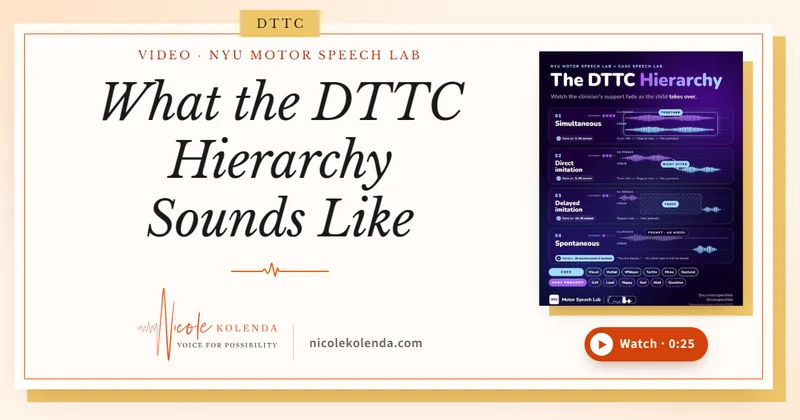
It's an idea that actually originated with Maria Montessori, of the Montessori schools: the idea that progress is not linear. We know what that means. We go up, and then we have a setback, and then we go up again. I think we can apply that to our own lives too. But really, if you think about it, this is what happens in therapy. I'd say in all therapy, but especially in motor speech therapy, and this is why we call it dynamic. We're constantly moving up and down within the DTTC hierarchy.
And we have to think: where are they right now, in this block, in this moment? Yesterday, maybe we got to delayed imitation, but today I'm only at direct imitation, and they need a lot of cueing. Maybe I was able to get to delayed the day before, but today I can't. And then a week from now, we might be into spontaneous.
So we're constantly shape-shifting in treatment. We're meeting the child where they are and adjusting our feedback so they can progress. But in the bigger picture, they're moving up; it's just not a straight line. They're gaining skill, maybe stepping back a little, taking it all in, and then going back up again.
So I just wanted to come in and remind you, when you're doing this treatment: progress is not linear.