
NYU Motor Speech Lab · Video library
Quick tips for pediatric motor speech therapy
111 short videos by Nicole on CAS, DTTC, cueing and practice. Every video has its full transcript.



111 short videos by Nicole on CAS, DTTC, cueing and practice. Search what she says, not only the titles. Every video has its full transcript.
 "Watch Me, Listen to Me, and Do What I Do"
 When a Child Can't Engage in Dynamic Assessment Yet
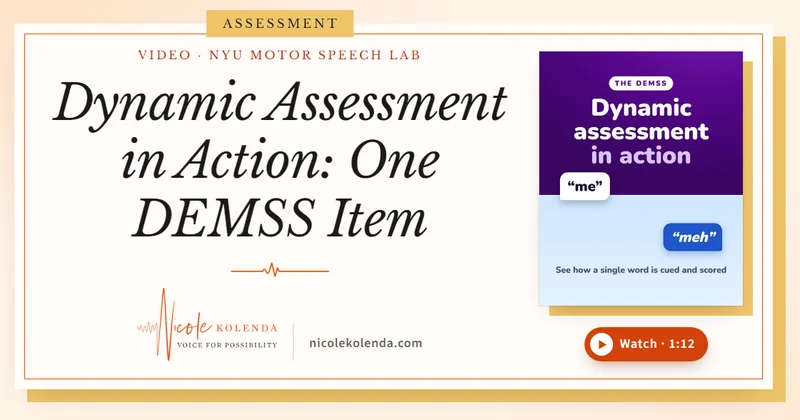 Dynamic Assessment in Action: One DEMSS Item
 What Is Dynamic Assessment, and Why Does It Matter?
 Quick Tip: Targeting Prosody in DTTC
 Why We Vary Prosody in DTTC: Dirt Road or Six-Lane Highway?
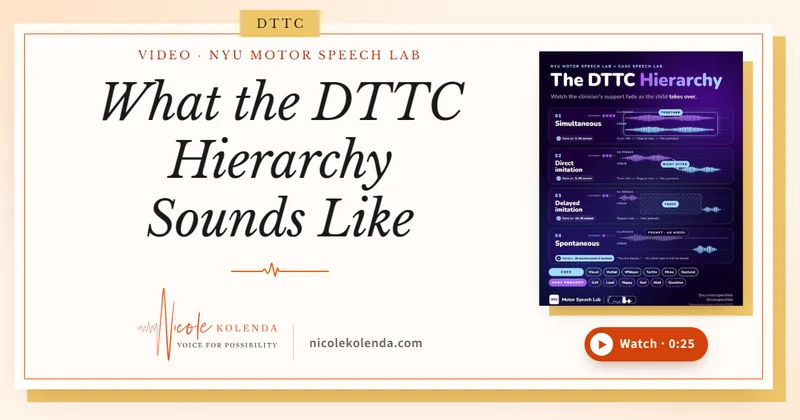 What the DTTC Hierarchy Sounds Like
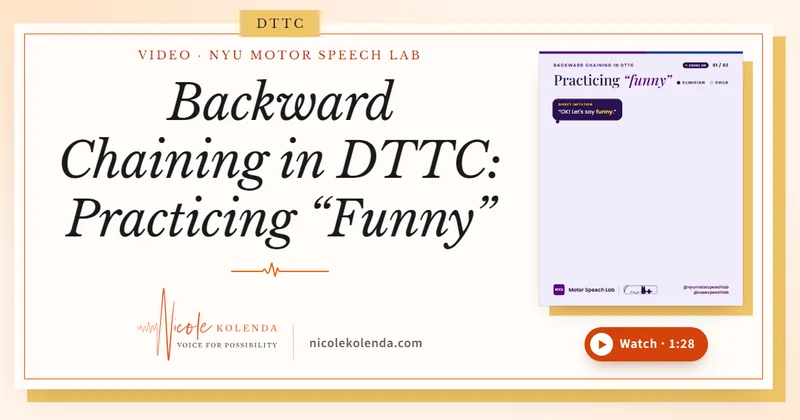 Backward Chaining in DTTC: Practicing "Funny"
 What Does Multisensory Cueing Look Like?
 Treating CAS and Other Speech-Language Goals in the Same Session
 DTTC Is Not Play-Based (But It Can Be Joyful)
 Conscious Practice and Blocked Practice in Pediatric Motor Speech Therapy
 H Is for High-Frequency Practice | Apraxia Awareness Month
 The ABCs of Practice: Accessible, Blocked, Conscious
 CAS Is About Coordinated Movement, Not Single Sounds
 Kicking Off Apraxia Awareness Month With Dr. Edythe Strand
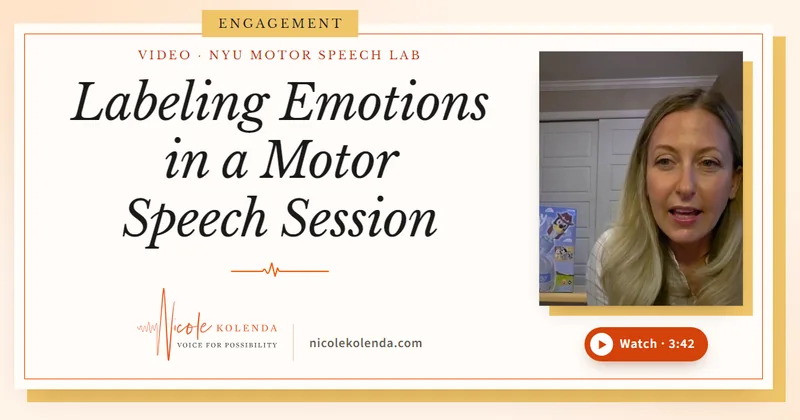 Labeling Emotions in a Motor Speech Session
 Negative Practice: When to Set a Target Aside
 Why Dynamic Assessment Matters in Diagnosing CAS
 The Parking Lot Method for Conscious Practice
 Where to Find Target Words for the STRIVE Framework
 Choosing Phrase Targets for CAS, With Amy Graham
 The STRIVE Framework for Target Selection in CAS
 Talking Through the STRIVE Framework With Amy Graham
 Using Tactile Cues in Motor Speech Therapy
 Don't Skip Varied Prosody
 Progress Is Not Linear: Moving Through the DTTC Hierarchy
 When a Target Word Is Too Hard
 Lab Updates: Apraxia Kids Walk, ASHA, and a Free Lunch and Learn
 Setting Up for Success: Build Rapport First
 Why Specific Feedback Matters
 Motor Mindset: Be a Present Practitioner
 Last Call: CAS Treatment Studies Recruiting for Fall 2025
 When Direct Imitation Is Too Hard
 Simultaneous Production in the DTTC Hierarchy
 Knowledge of Performance vs. Knowledge of Results
 Conscious Practice Takes Time: Feedback That Motivates
 The Parking Lot Method, Demonstrated With Toys
 Now Recruiting: Two CAS Treatment Studies
 Three Ways to Add Variability of Practice
 End Every Block on a Positive Note
 What Is Treatment Fidelity?
 Sticker Projects in Motor Speech Therapy
 Using the Challenge Point Framework to Pick Targets
 How to Choose Which Cues to Use
 Working on Accurate Movement Gestures
 Can CAS Coexist With a Phonological Disorder?
 Four Ways to Start Motor Speech Therapy Off Right
 Motor Speech Therapy Is Hard Work for Clinicians Too
 How to Start Cueing a Target Word
 Feel the Movement: Feedback for Conscious Practice
 A Balloon Pump Toy for Motor Speech Practice
 Progress Is Not Linear
 The DTTC Hierarchy: Delayed Imitation and Spontaneous Production
 Making the Shift: Think About the Whole Word, Not the Phoneme
 Our CAS Treatment Studies, With Dr. Julie Case
 What to Do Instead of Negative Practice
 Backward Chaining for Multisyllabic Targets
 Three Reinforcers for Motor Speech Sessions
 How to Get Buy-In From Older Kids in Motor Speech Therapy
 Partnering With Older Kids in Motor Speech Therapy
 DTTC Tip: Start Every Block With Direct Imitation
 Two Tips for Giving the DEMSS to Profoundly Impacted Kids
 Dynamic Assessment for CAS: How the DEMSS Works
 What an Initial CAS Assessment Looks Like at the NYU Motor Speech Lab
 Key Elements of Practice, Part 5: Positive, Not Negative, Practice
 Key Elements of Practice, Part 4: Practice Prosody From the Start
 Key Elements of Practice, Part 3: Multimodal Cues for Movement
 Key Elements of Practice, Part 2: Conscious Practice
 Key Elements of Practice, Part 1: Structured Practice
 Zoo Train: An iPad Reinforcer for Distractible Kids
 Stickers as Reinforcers in Motor Speech Therapy
 A Paw Patrol Car Set That Keeps Kids Going Through a Session
 What I Say to New Participants to Set Up Treatment
 Target Movement Gestures, Not Sounds in Isolation
 How Many Productions Should You Get in a Session?
 What Marathon Training Teaches Us About Motor Speech Practice
 "Meet Me Here": A Favorite Cue for Starting a Block
 Making the Shift From Articulation Therapy to Motor Speech Therapy
 Giving Kids Choice and Control in Motor Speech Therapy
 If It's Not Going Through the Cortex, There's No Learning
 When They First Get It, Do It Five More Times
 Target Word "In": Specific Feedback to Push Harder
 Target Word "Bunny": Shaping the Jaw Opening
 Target Word "Hi," Part 2: Moving Up the DTTC Hierarchy
 The Intrusive Schwa in CAS, With Dr. Julie Case
 I Have My Target Word, but Where Do I Start?
 Video Record Yourself When You Start DTTC
 How Nicole Organizes Her DTTC Sessions
 Stop and Acknowledge the Child's Hard Work
 Sprinkling In Spontaneous Productions
 End Every Block on an Accurate Production
 Choosing Target Words Takes Time and Trial and Error
 Stopping Negative Practice
 Picking Target Words From the DEMSS
 Tell Them to "Fix It"
 Don't Segment Multisyllabic Words
 Using Hand Gestures as Cues
 Simultaneous Production: The First Step in DTTC
 Two Types of Feedback: Knowledge of Results and Knowledge of Performance
 Feedback Through Interoception and Performance Imagery
 Keeping Kids Engaged With Paint-by-Stickers
 My Favorite Toy for the DEMSS
 Close Your Eyes So They Can Watch Your Mouth
 Hold Up Your Fingers to Count Repetitions
 How Incomplete Velopharyngeal Closure Can Impact Consonant Production
 How to Include Your Child’s Sibling in Their Speech Therapy Progress
 Talk Less to Get Your Child to Talk More
 Feedback in Speech Therapy
 How to Encourage Imitation When Your Child Is Reluctant
 5 Tips for Successful Online Speech Therapy
No videos match that yet. Try a shorter word.
Search the blog instead